
Swiss Regulatory Frameworks Shaping Progressive Jackpot Dynamics in Licensed Online Slots
Swiss federal legislation establishes strict licensing requirements that directly govern how operators manage progressive jackpot pools in online slot environments, and these rules shape contribution rates along with distribution mechanics across approved platforms. The Federal Act on Gambling, enforced through the Swiss Federal Gaming Board, mandates transparent pooling structures that prevent unauthorized cross-border merging while allowing controlled growth within licensed networks. Operators must allocate fixed percentages of each wager to jackpot pools under guidelines that cap maximum contributions per game round, and this framework creates steady yet regulated accumulation patterns that differ markedly from less structured markets. Data from regulatory filings shows that licensed Swiss platforms report consistent monthly pool increases tied to player volume rather than aggressive promotional boosts.Core Elements of Swiss Licensing Requirements
Every licensed operator undergoes annual audits that verify jackpot software integrity and pool segregation from operational funds, which ensures that progressive totals remain protected even during platform transitions or technical updates. These audits also track how pools respond to regulatory caps on single-player wins adn maximum stake limits, factors that influence long-term growth trajectories.
Because Swiss rules require all jackpot activity to occur within nationally approved systems, operators cannot freely connect their pools to international networks without separate approvals, and this isolation produces self-contained growth cycles that rely entirely on domestic player participation.
Mechanics of Pool Growth Under Regulatory Caps
Contribution formulas approved by regulators typically range between 0.5 and 2 percent of each qualifying bet, with exact rates disclosed in game rules and subject to periodic review, and these percentages determine how quickly pools expand relative to overall betting activity. When player numbers rise during peak periods, the fixed contribution structure produces predictable acceleration without sudden spikes that could trigger additional compliance checks.
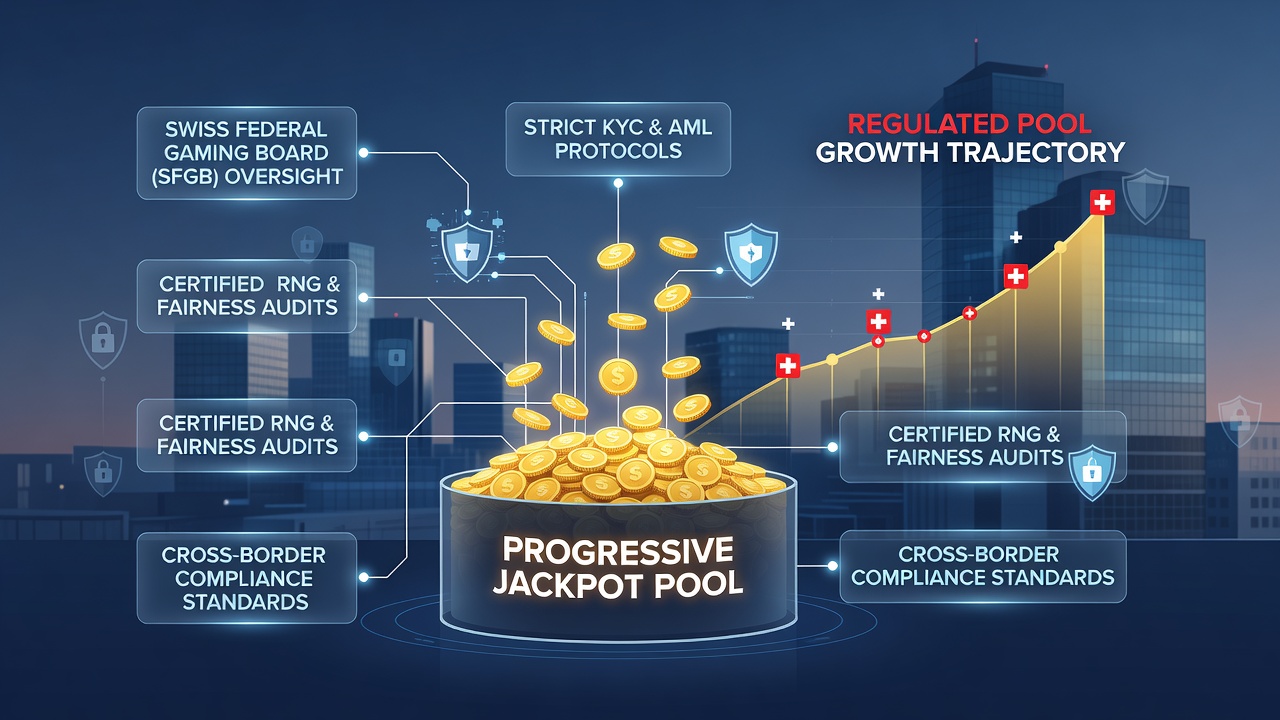
Research from the Swiss Institute of Comparative Law indicates that regulated caps prevent pool stagnation while curbing excessive growth that might attract high-risk behavior, and operators adjust game parameters within those boundaries to maintain steady accumulation. In August 2026, several platforms reported record pool levels driven by increased domestic engagement following seasonal tourism patterns rather than external network contributions.
Comparative Influence Across Licensed Markets
Unlike frameworks in certain Canadian provinces where multi-operator linking receives broader approval, Swiss regulations emphasize contained pools that limit exposure to foreign regulatory variances, and this approach produces more stable but slower average growth rates according to industry reports from the European Casino Association. Licensed Swiss environments therefore prioritize compliance documentation over rapid expansion strategies.
One study released by researchers at the University of Zurich examined five years of licensed slot data and found that jackpot pools under Swiss oversight reached maturity thresholds approximately 15 percent slower than comparable unregulated environments, yet demonstrated lower variance in payout frequency once thresholds were met.
Transparency Obligations and Their Effects
Operators must publish real-time jackpot totals and historical payout records on public dashboards, requirements that increase player trust while simultaneously creating performance benchmarks that regulators monitor for anomalies. These disclosures also allow third-party analysts to track how regulatory adjustments, such as changes to maximum bet sizes, correlate with shifts in pool velocity.
Because all data flows through centralized reporting systems, authorities can identify when external events like economic shifts affect participation rates and, consequently, pool growth, enabling timely policy responses without disrupting ongoing operations.
Conclusion
Swiss regulatory frameworks create a controlled environment where progressive jackpot pools expand through verified, domestically focused mechanisms that balance growth with player protection standards. Licensed operators navigate fixed contribution rules, audit requirements, and transparency obligations that collectively shape accumulation patterns in measurable ways. As regulatory updates continue through 2026 and beyond, pool dynamics within these licensed online slot environments will reflect ongoing refinements to contribution formulas and cross-platform connectivity limits.